Pricing
Every plan is baseline plus metered — a fixed monthly fee for your tier, then pay only for what your product actually consumes as it grows. Your SF account holds a balance, and the balance pays for your metering. The plans below are rendered live from the billing system — the same rows the product runs on, not a brochure that drifts out of date.
Usage is charged on top of the plan. Rates can differ by plan — choose one to see its rates.
| Usage item | Price | Included in plan |
|---|---|---|
| AI decisions — jev input | $0.84 per 10,000,000 tokens | None |
| AI decisions — jev output | $0 per 1,000,000 tokens | None |
| AI tokens — fable cache read | $1.20 per 1,000,000 tokens | None |
| AI tokens — fable cache write 1h | $24 per 1,000,000 tokens | None |
| AI tokens — fable cache write 5m | $15 per 1,000,000 tokens | None |
| AI tokens — fable input | $12 per 1,000,000 tokens | None |
| AI tokens — fable output | $60 per 1,000,000 tokens | None |
| AI tokens — haiku cache read | $0.12 per 1,000,000 tokens | None |
| AI tokens — haiku cache write 1h | $2.40 per 1,000,000 tokens | None |
| AI tokens — haiku cache write 5m | $1.50 per 1,000,000 tokens | None |
| AI tokens — haiku input | $1.20 per 1,000,000 tokens | None |
| AI tokens — haiku output | $6 per 1,000,000 tokens | None |
| AI tokens — opus cache read | $0.60 per 1,000,000 tokens | None |
| AI tokens — opus cache write 1h | $12 per 1,000,000 tokens | None |
| AI tokens — opus cache write 5m | $7.50 per 1,000,000 tokens | None |
| AI tokens — opus fast:cache read | $1.20 per 1,000,000 tokens | None |
| AI tokens — opus fast:cache write 1h | $24 per 1,000,000 tokens | None |
| AI tokens — opus fast:cache write 5m | $15 per 1,000,000 tokens | None |
| AI tokens — opus fast:input | $12 per 1,000,000 tokens | None |
| AI tokens — opus fast:output | $60 per 1,000,000 tokens | None |
| AI tokens — opus input | $6 per 1,000,000 tokens | None |
| AI tokens — opus output | $30 per 1,000,000 tokens | None |
| AI tokens — opus55 cache read | $0.24 per 1,000,000 tokens | None |
| AI tokens — opus55 cache write 1h | $9.60 per 1,000,000 tokens | None |
| AI tokens — opus55 cache write 5m | $6 per 1,000,000 tokens | None |
| AI tokens — opus55 fast:cache read | $0.48 per 1,000,000 tokens | None |
| AI tokens — opus55 fast:cache write 1h | $19.20 per 1,000,000 tokens | None |
| AI tokens — opus55 fast:cache write 5m | $12 per 1,000,000 tokens | None |
| AI tokens — opus55 fast:input | $9.60 per 1,000,000 tokens | None |
| AI tokens — opus55 fast:output | $48 per 1,000,000 tokens | None |
| AI tokens — opus55 input | $4.80 per 1,000,000 tokens | None |
| AI tokens — opus55 output | $24 per 1,000,000 tokens | None |
| AI tokens — sonnet cache read | $0.24 per 1,000,000 tokens | None |
| AI tokens — sonnet cache write 1h | $4.80 per 1,000,000 tokens | None |
| AI tokens — sonnet cache write 5m | $3 per 1,000,000 tokens | None |
| AI tokens — sonnet input | $2.40 per 1,000,000 tokens | None |
| AI tokens — sonnet output | $12 per 1,000,000 tokens | None |
| AI web searches | $0.12 per 10 searchs | None |
| API requests | $0.12 per 1,000 requests | None |
| Bandwidth | $0.18 per gb | None |
| Bandwidth (per USD of Vercel spend) | $1.20 per usd | None |
| Build sandbox compute | $1.20 per usd | None |
| Build sandbox CPU (per active CPU-hour) | $15.36 per 100 cpu-hours | None |
| Build sandbox creations | $0.72 per 1,000,000 creations | None |
| Build sandbox data transfer (per GB) | $0.18 per gb | None |
| Build sandbox memory (per GB-hour) | $25.44 per 1,000 gb-hours | None |
| CI & package storage | $403.23 per 1,000,000 gb-hours | None |
| CI build minutes | $0.72 per 100 minutes | None |
| Connection API calls | $5.04 per 100,000 calls | None |
| Database compute | $26.64 per 100 compute-hours | None |
| Database restore history | $0.24 per gb-month | None |
| Database snapshots | $1.08 per 10 gb-months | None |
| Database storage | $0.42 per gb-month | None |
| Email domain rental (per day) | $0.08 per domain-day | None |
| Emails sent | $0.48 per 1,000 emails | None |
| File download transfer (per GB) | $0.06 per gb | None |
| Function invocations | $0.72 per 1,000,000 invocations | None |
| Hosting compute | $12.72 per 1,000 gb-hours | None |
| Hosting compute (per USD of Vercel spend) | $1.20 per usd | None |
| Hosting CPU (per active CPU-hour) | $15.36 per 100 cpu-hours | None |
| Inbound emails | $0.48 per 1,000 emails | None |
| Origin transfer (per GB) | $0.72 per 10 gbs | None |
| Package downloads | $0.60 per gb | None |
| Platform seat (per seat, per day) | $0.80 per seat-day | None |
| Platform subscriptions (Static IPs, seats) | $1.20 per usd | None |
| Static IP data transfer (per GB) | $0.18 per gb | None |
| Static IPs (per project, per day) | $4 per project-day | None |
| Storage | $2.76 per 100 gb-months | None |
| Storage data transfer out | $0.06 per gb | None |
| Workflow actions | $0.06 per 1,000 actions | None |
The tiers
Three tiers, one for each kind of builder. The plans above carry these names and their prices; what follows is who each is for.
For founders building their first product — from one mission statement to a company with its first paying customer.
For established businesses launching the next product — customer-facing or internal — alongside what they already run.
Enterprise-grade scale, security and support for organisations that evaluate before they buy.
Evaluating at the top end? The technical dossier is the evaluation, written down.
Where the money goes
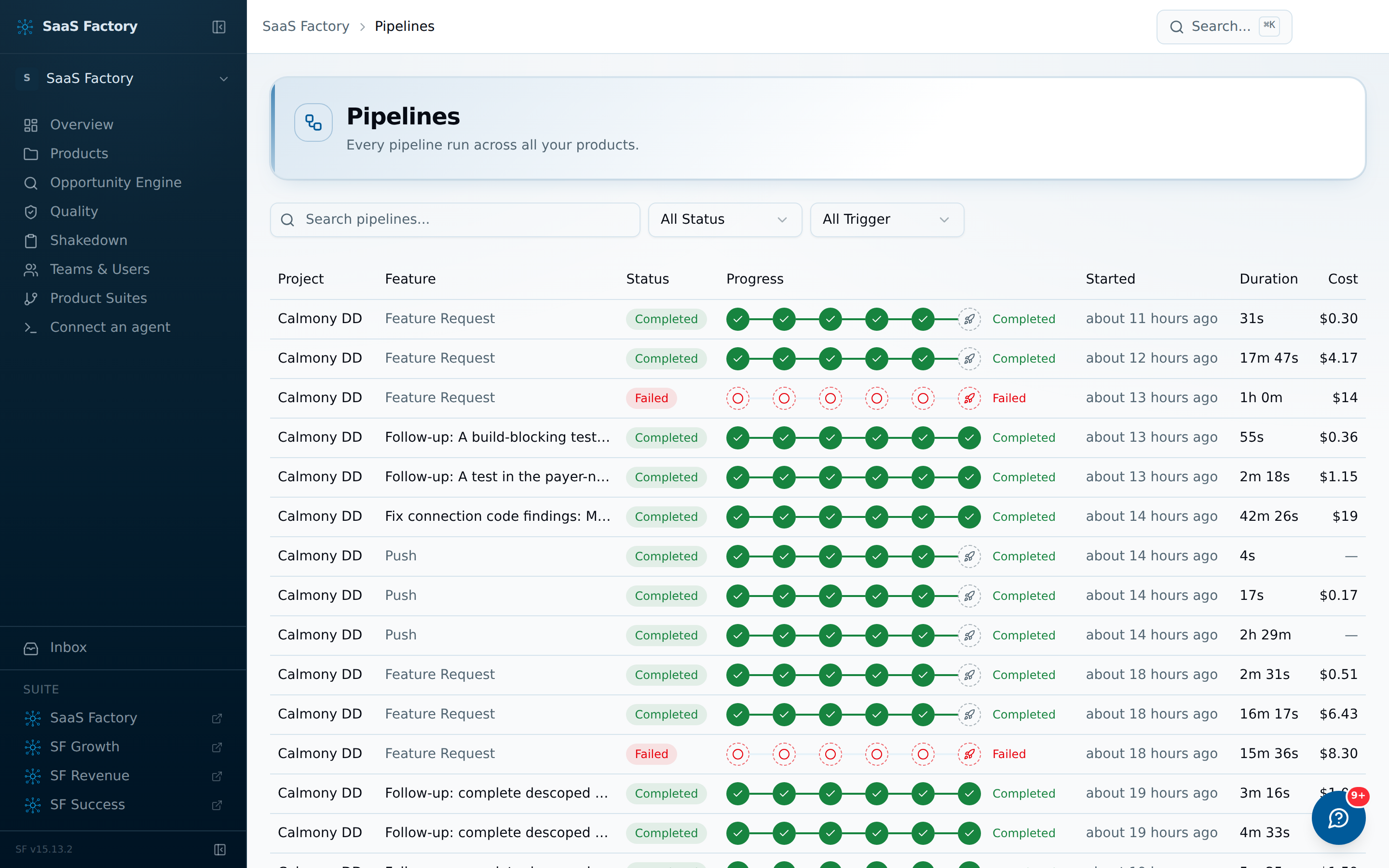
Metered raises a fair question: metered on what? Here the bill itemises itself — every feature carries the real cost of building it, so the balance you spend has names on it: this feature, that fix, to the cent. Most software subscriptions are a black box; this one keeps receipts. The full demonstration lives on How it works.
Objections
The questions that decide a purchase, answered plainly.
